
Standby Guardianship


Stepparent Adoption
Infant Safe Haven Laws
Grounds for Involuntary Termination of Parental Rights


The Value of Adoption Subsidies: Helping Children Find Permanent Families
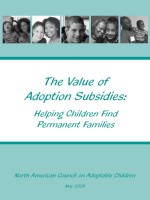
Since its founding in 1974 by adoptive parents, the North American Council on Adoptable Children (NACAC) has been dedicated to the mission that every child deserves a permanent family. Through education, support, parent leadership capacity building, and advocacy, NACAC promotes and supports permanence for children and youth in foster care in the United States and Canada. Some of NACAC’s core activities include empowering parents to support one another as they raise children adopted from foster care; working with policymakers, administrators, and grassroots advocates to reform the foster care system and improve outcomes for children and youth; and disseminating information that will help child welfare professionals and adoptive families better support vulnerable children.
This publication, funded through a grant from The Pew Charitable Trusts, was written for NACAC by Madelyn Freundlich, with assistance from NACAC staff members and consultants Mary Boo, Janet Jerve, Joe Kroll, Josh Kroll, Jennifer Miller, Christina Romo, Gina Russo, and Jeanette Wiedemeier Bower.
New Jersey Referral Resources

New Jersey Referral Resources for Adoption

National Foster Care Adoption Attitudes Survey 2013 Executive Summary & Detailed Findings

Commissioned by the Dave Thomas Foundation for Adoption
Conducted by Harris Interactive

The Vital Role of Adoption Subsidies
More than 104,000 children in the United States are waiting in foster care to be adopted by permanent, loving parents. These youngsters, who are on average 8 years old, typically remain in temporary situations over three years before being placed with “forever families.” The Adoption Assistance and Child Welfare Act of 1980 aimed to promote adoptions of waiting children by requiring states to provide subsidies to adoptive parents. These subsidies, at a median of just $485 a month, help families meet the basic needs of their children and may include amounts to help pay for critical services such as healthcare, therapy or tutoring to address their children’s physical, mental, cognitive and developmental challenges.
Published by:
Adoption Institute.org
It’s Time to Make Older Child Adoption Reality

The number of youth who age out of foster care has risen steadily over the past decade, even in the wake of increased efforts to achieve permanence for all children in foster care.
For far too many youth, aging out of care results in homelessness, work instability, and a lack of stable, loving relationships with adults. These grim facts are even more heartbreaking because we know these youth could have found a permanent family, if only they had been given the chance.
Younger foster children have a much better chance of finding a permanent family. Once waiting children in foster care are nine or older, they are much less likely to be adopted. About 43 percent of waiting children are nine or older, but 72 percent of those who are adopted are under age nine. The average age of children when they are adopted from foster care is 6.6 years, while the average age of waiting children is 8.2 years. The average waiting child has been in foster care for more than three years. Every day that a waiting child remains in foster care, his chances of being adopted decrease.
Published by:
North American Council on Adoptable Children

- « Previous Page
- 1
- …
- 27
- 28
- 29
- 30
- 31
- …
- 33
- Next Page »